Love the idea of a sunlit Victorian porch or a Craftsman bungalow near downtown Franklin, but not sure what sets each style apart? If you appreciate character, original details, and the story behind a home, Franklin offers a rich mix of historic architecture that fits many tastes. In this guide, you will learn how to recognize each style, what buyers tend to love, the tradeoffs to plan for, and how to approach inspections, restoration, and local compliance with confidence. Let’s dive in.
Why Franklin’s historic homes stand out
Franklin’s historic core includes a concentrated mix of 19th and early 20th century homes. The town’s fabric reflects early settlement, agricultural wealth, post‑Civil War rebuilding, and early suburban growth in the 1900s.
You will see a sequence that often runs from early Federal and Greek Revival farmhouses, to Victorian infill in the late 1800s, to Craftsman bungalows and vernacular farmhouses in the early 1900s. Later 20th century homes fill in around these older pockets.
Climate and geology matter here. Middle Tennessee’s humid summers increase moisture and pest concerns, and the region’s expansive clay soils can contribute to foundation movement. Parcels near the Harpeth River and tributaries can face localized flood risk, so checking flood maps for specific properties is a smart step.
Local resources that can help you plan include the City of Franklin’s historic zoning and design review staff, Historic Franklin, Inc., the Tennessee Historical Commission, the National Park Service’s preservation briefs, and the National Trust for Historic Preservation.
Style guide to Franklin architecture
Federal, circa 1780–1830
Federal is Franklin’s earliest national‑period style, often found on older parcels and farm complexes.
Key features you might notice:
- Symmetrical facades, often five bays
- Side gable or low hipped roofs, centered entry with transom or fanlight
- Narrow sidelights, multi‑pane wood windows (6 over 6 or 9 over 9)
- Brick or weatherboard siding, simple moldings inside
Typical layout is a central hallway with paired rooms on each side. Many have later Victorian or Colonial Revival additions. Original elements like wide‑plank floors and fireplaces are highly valued.
Greek Revival, circa 1825–1860
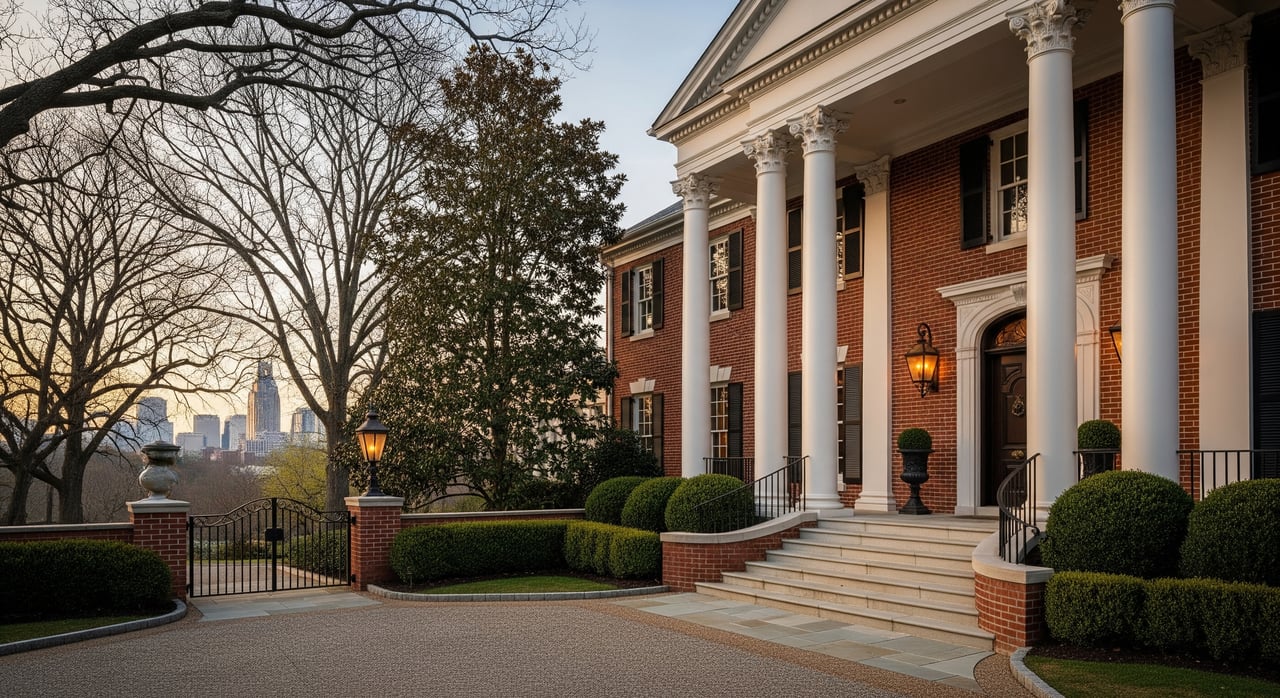
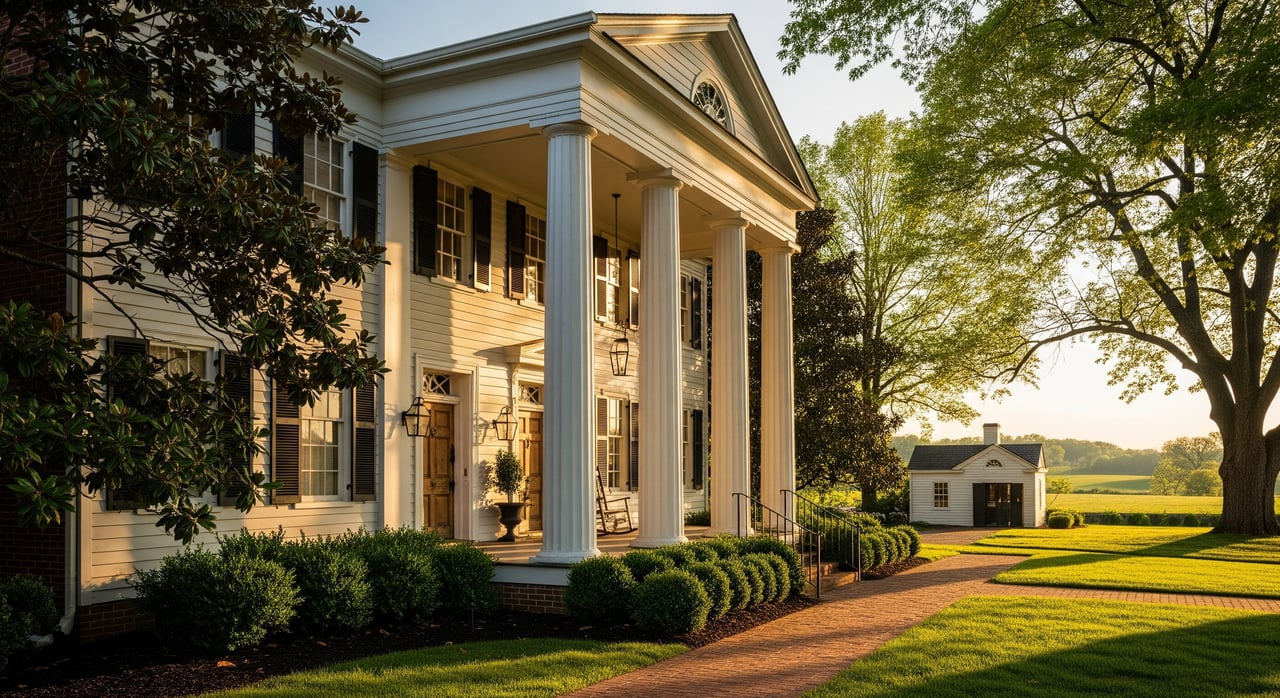
Greek Revival reflects antebellum prosperity. In Franklin, these can be larger plantation‑era homes or townhouses.
What to look for:
- Columned porches or porticoes, pedimented gables, pilasters
- Wide entablature and cornice, symmetrical massing
- Taller ceilings, formal parlors, elaborate mantels
Brick and wood are common, often with stuccoed or painted trim. Many are landmark properties that may fall under closer preservation oversight.
Victorian family, mid to late 1800s
Victorian homes grew with Franklin’s post‑Civil War rebuilding. You will find a range of substyles, sometimes on the same street.
Common local substyles:
- Italianate: Low‑pitched roofs, tall narrow windows with arches, deep eaves with brackets
- Queen Anne: Asymmetry, wraparound porches, towers or turrets, bay windows, patterned shingles, stained glass
- Folk Victorian: Simpler house forms with applied trim like spindles and brackets
Interiors often have more segmented rooms, decorative plasterwork, and ornate mantels. Many retain original porches and millwork that need thoughtful maintenance.
Craftsman and Bungalow, circa 1905–1930
Early 20th century bungalows are common in neighborhoods developed in the first decades of the 1900s.
Defining touches:
- Low‑pitched gabled roofs and wide eaves with exposed rafters
- Tapered porch columns on masonry piers, mixed materials like stone and wood
- Multi‑pane upper window over single‑pane lower sash
Inside, you may find built‑ins, open living and dining flows for the era, and substantial wood trim. Craftsman homes are popular for respectful modern updates that keep the original character.
Farmhouse and I‑house, 19th to early 20th century
Franklin’s vernacular farmhouses are functional and often expanded over time.
Key markers:
- Two‑story I‑house that is one room deep with a central hall
- Full‑width porches and simple gabled roofs
- Rear ells and enclosed porches as common additions
You will see wood framing with clapboard or board‑and‑batten siding. Many sit within or near newer subdivisions as farmland converted over time.
Colonial Revival and other early revivals
Colonial Revival homes show symmetry, classical door surrounds, and multi‑pane windows. You may also spot gambrel roofs. Some are early 20th century replacements or remodels of older properties.
Construction notes for older Franklin homes
- Foundations can be brick or stone piers on early houses, with continuous masonry or poured concrete on later homes
- Walls may be solid brick or balloon‑framed wood with limited insulation
- Interiors often feature plaster over lath
- Wood windows are common and can often be repaired rather than replaced
- Porch roofs, flashing, and decorative elements are maintenance priorities
What buyers love about historic homes
Historic homes in Franklin offer a lifestyle and look that you rarely find in newer construction.
Highlights buyers tend to value:
- Authentic materials and details, such as original millwork, wide‑plank floors, mantels, transoms, and stained glass
- Architectural variety, including porches, bay windows, turrets, columns, and unique massing
- Proximity to downtown Franklin’s restaurants, events, and amenities
- Mature trees and an established sense of place
- The chance to customize with thoughtful restoration that keeps character
Tradeoffs and how to plan for them
Older homes can require extra care. With the right plan, you can address most challenges while preserving what you love.
Common tradeoffs and tips:
- Room sizes and layouts. Kitchens and baths may be compact. Consider targeted floor plan tweaks that avoid removing significant historic fabric.
- Maintenance. Expect routine exterior care for paint, porches, gutters, and wood trim. A maintenance plan and a trusted contractor make a big difference.
- Efficiency. Original windows and little wall insulation can reduce performance. Explore reversible weatherization strategies and attic insulation that do not trap moisture.
- Local review. In historic districts, exterior changes often require design review. Build in time and consult staff early.
- Unknowns. Concealed damage and older systems may surface during renovation. Carry a contingency and prioritize life‑safety and moisture control first.
Ownership and restoration essentials
Pre‑purchase due diligence
- Hire inspectors who know historic buildings, including structural, pest, and system specialists
- Ask for documentation such as prior permits, drawings, warranties, and any lead or asbestos reports
- Check for preservation easements, recorded covenants, and local historic overlays on title
- Review flood risk using official maps, especially for parcels near the Harpeth River and tributaries
Common repairs and upgrades
- Foundations and drainage. Address grading, functioning gutters and downspouts, and stabilization where needed, especially on clay soils.
- Roofs and flashing. Porch roofs and dormers are frequent leak points.
- Termite and pest treatment. Request inspection histories and plan for regular monitoring.
- Mechanical systems. Many homes need updated HVAC, electrical service, and plumbing to meet modern loads and safety standards.
- Insulation and moisture control. Focus on attics and ventilation, and avoid trapping moisture against historic materials.
- Windows. Repairing original wood sash often preserves both function and character. Replacement may be limited in historic districts.
Preservation rules and approvals
- Properties inside Franklin’s designated historic districts typically require design review for exterior work. You request approvals through the city’s certificate process.
- National Register listing alone does not restrict private owners. Local historic zoning and any preservation easements are what impose rules.
- For income‑producing properties, a 20 percent federal Historic Rehabilitation Tax Credit can apply when work meets the Secretary of the Interior’s Standards. Verify current eligibility and state options with qualified professionals.
Costs and budgeting
- Major items to plan for include roofs, foundation or structural work, system replacements, window and plaster repair, and trim restoration
- Build a 10 to 25 percent contingency for hidden conditions
- Choose contractors with local historic experience and references for similar projects
Insurance, financing, and resale
- Some insurers may require updates or charge higher premiums for older systems. Shop carriers experienced with historic homes.
- Renovation loans such as FHA 203(k) or Fannie Mae HomeStyle can help finance repairs. Work with lenders familiar with historic properties.
- Sensitively restored homes in desirable Franklin neighborhoods often command premiums for character and location. Resale value benefits from preserved historic fabric along with well‑executed modern conveniences.
Technical resources
- National Park Service Preservation Briefs for practical guidance on windows, roofs, masonry, wood, and weatherization
- National Trust for Historic Preservation for homeowner education and fundraising ideas
- Tennessee Historical Commission and Historic Franklin, Inc. for local assistance and potential contractor referrals
Search smarter in Franklin
Refine by neighborhood context
- Target downtown historic districts for denser Victorian and antebellum options
- Explore areas just beyond the core for early 20th century bungalows and farmhouses
- Balance walkability, lot size, commute routes, and proximity to everyday amenities based on your lifestyle
Key pre‑offer questions
- Is the property within a local historic district or listed on the National Register? Any preservation easements or restrictive covenants on title?
- What permitted renovations or major repairs have been completed? Are documents available?
- Any known issues with foundation, grading, insects, or past flood events?
- What is the status of HVAC, electrical panel capacity, and plumbing? When were they last updated?
- Are windows, plaster, and trim original, restored, or replaced?
Restoration‑friendly features to look for
- Intact historic fabric such as original doors, staircases, and floors
- Accessible attics or crawlspaces that simplify system work
- Sound roof, positive grading, and well‑maintained gutters and flashing
- Solid porch foundations, repaired chimneys, and level floors, rather than fresh cosmetics over unresolved issues
- Historic photos or records that guide accurate restoration and approvals
Practical planning steps
- Before making a serious offer, arrange a thorough inspection with a historic‑savvy inspector and include an inspection contingency.
- If you plan exterior changes, consult the city’s preservation staff early to understand timelines and submissions.
- Budget for unknowns and prioritize moisture and life‑safety work first.
- If you will pursue tax credits for a rental or commercial use, engage preservation specialists early to align with the Secretary of the Interior’s Standards.
- Build a team that includes a contractor and, for larger work, an architect experienced in historic preservation, plus a lender who offers renovation financing.
Ready to find your Franklin classic?
Whether you are drawn to a Greek Revival with a grand porch or a Craftsman bungalow with built‑ins, you can buy with confidence when you know the styles, the tradeoffs, and the process. With a concierge approach, local relationships, and a focus on quality, you get guidance from first tour to final approval that protects your investment and the home’s character. If you are ready to explore Franklin’s historic homes, connect with Yogi Milsap to map the right search and strategy.
FAQs
What historic home styles are most common in Franklin?
- You will often see Federal and Greek Revival near the oldest parcels, a wide mix of Victorian substyles downtown, and many early 1900s Craftsman bungalows and farmhouses in neighborhoods just beyond the core.
How do Franklin’s historic district rules affect renovations?
- Properties inside designated districts typically need city design review for exterior work, so plan timelines accordingly and consult staff early to streamline approvals.
What inspections should I order for a Franklin historic home?
- Along with a general inspection, consider a structural engineer, termite and pest inspection, and HVAC, electrical, and plumbing specialists who understand older buildings.
Are there tax credits for restoring a Franklin property?
- A federal 20 percent Historic Rehabilitation Tax Credit can apply to certified work on income‑producing properties, not primary residences, and state programs vary, so verify with preservation and tax professionals.
How does flood risk near the Harpeth River affect buying?
- Some parcels face localized risk that can affect insurance costs and allowable improvements, so review official flood maps and ask for any past flood disclosures.
Should I repair or replace original wood windows?
- In many cases, repairing original wood sash preserves character and functions well when paired with weatherization, while full replacement may be restricted in historic districts.